
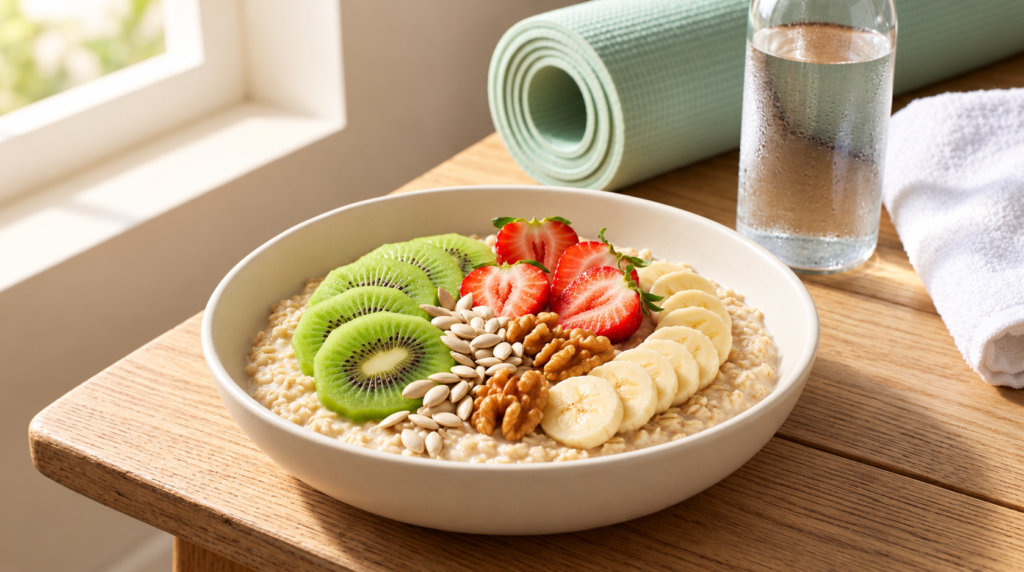
Introduction: Start Your Morning the Healthy Way
Mornings can be busy. Sometimes, we skip breakfast, grab a cup of coffee, or eat whatever is available. But a healthy morning routine can make a positive difference to how we feel throughout the day.
A balanced healthy breakfast gives your body energy after a night of sleep. Combining whole grains, fruits, nuts, and a source of protein can help you feel satisfied and support your daily nutritional needs.
The good news is you don’t need expensive ingredients or complicated recipes. A bowl of oatmeal with fruits, a serving of muesli, or a homemade banana shake with almond or oat milk can be a great way to start your day.
In this blog, we’ll explore three easy & healthy breakfast recipes, how to eat them, who may benefit from them, who should be careful, and a simple home workout routine for beginners.
1. Oatmeal with Fresh Fruits
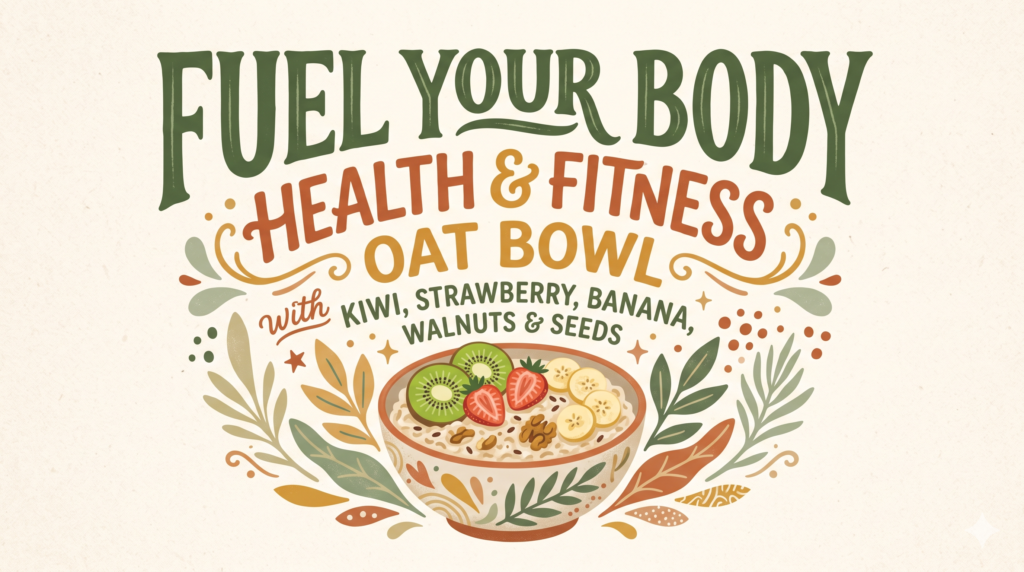
Oatmeal is a simple,healthy and filling breakfast made from oats cooked in water or milk. Adding fruits, seeds, and nuts makes it more flavourful and adds important nutrients.
Ingredients
- ½ cup rolled oats
- 1 cup milk or unsweetened oat milk
- ½ banana, sliced
- A few strawberries or blueberries, or any seasonal fruit
- 1 teaspoon chia seeds (optional)
- 4–5 almonds, chopped
- Cinnamon powder (optional)
How to Make It
- Add the oats and water/milk to a saucepan.
- Cook over low to medium heat for around 5–7 minutes, stirring occasionally, until creamy. Follow the packet instructions for your oats.
- Transfer the oatmeal to a bowl.
- Add sliced banana, other fruits, chopped almonds, and chia seeds.
- Sprinkle a little cinnamon on top if you like.
You can also prepare overnight oats by mixing oats with milk and refrigerating them overnight. Add fresh fruits and nuts in the morning.
How to Eat It
Eat your oatmeal fresh and adjust the portion according to your appetite and energy needs. If you need a more filling breakfast, add plain Greek yogurt, milk, soy milk, or nut butter, depending on your preferences and dietary needs.
Who Can Eat Oatmeal?
Oatmeal can be a good choice for:
- People looking for a quick, everyday breakfast.
- Students and working professionals who need a convenient morning meal.
- People who want to include more fibre in their diet.
- People looking for a balanced breakfast with whole grains and fruit.
Who should be careful?
People with coeliac disease or gluten sensitivity should choose oats labelled gluten-free because oats can be contaminated with gluten during processing. Anyone allergic to an ingredient should avoid it. If you have a medical condition requiring a specific diet, follow your healthcare professional’s advice.
2. Muesli: A Quick and Crunchy Breakfast
Muesli is a mixture that commonly contains rolled oats, nuts, seeds, and dried fruits. Some varieties contain added sugar, chocolate, or sweetened ingredients, so checking the label is important. It is especially convenient when you don’t have much time to prepare healthy breakfast.
Ingredients
- ½ cup muesli
- ¾–1 cup milk/oat milk/almond milk or another preferred milk
- ½ apple or banana, chopped
- 1 teaspoon pumpkin or chia seeds (optional)
- A few nuts (optional)
- Plain yogurt (optional)
How to Prepare It
- Pour the muesli into a bowl.
- Add milk or your preferred milk alternative.
- Let it soak for 5-10 minutes if you prefer a softer texture.
- Add fresh fruit and seeds.
- For extra protein, serve it with plain yogurt or another suitable protein rich food.
You can eat muesli cold or warm it gently with milk if you prefer a porridge like texture.
How to Eat Muesli
Choose a portion that suits your appetite and follow the serving guidance on the packet. Combine it with fresh fruit and a protein source to make breakfast more balanced.
For a healthier everyday option, look for muesli with whole grains, nuts, and seeds, and less added sugar.
Who Can Eat Muesli?
Muesli can suit:
- People who need a quick breakfast before work or college.
- People who enjoy whole grains, nuts, and dried fruit.
- Beginners who want to build a consistent breakfast habit.
Who should be careful?
People with nut allergies should check the ingredients and avoid unsafe products. Those who need to monitor blood sugar may prefer an unsweetened variety and a suitable portion. People with gluten intolerance should check whether the oats and other grains are certified gluten-free.
3. Banana Shake with Almond Milk or Oat Milk
A banana shake is a convenient healthy option when you prefer drinking your breakfast. Bananas provide carbohydrates and potassium, while almond milk and oat milk offer different nutritional benefits depending on the brand and fortification.
However, a banana shake alone may not provide enough protein for everyone. You can make it more balanced by adding an appropriate protein source.
Ingredients
- 1 medium ripe banana
- 1 cup unsweetened almond milk or oat milk
- 1 tablespoon peanut butter (optional)
- 1 teaspoon chia seeds (optional)
- A pinch of cinnamon (optional)
- Ice cubes (optional)
How to Make It
- Peel and slice the banana.
- Add the banana and almond or oat milk to a blender.
- Add peanut butter, chia seeds, and cinnamon if desired.
- Blend until smooth.
- Pour into a glass and drink fresh.
There is usually no need to add sugar or honey because a ripe banana already provides sweetness.
Almond Milk vs. Oat Milk
| Feature | Almond milk | Oat milk |
| Taste | Mild and nutty | Creamy and slightly sweet |
| Calories | Often lower | Often higher |
| Carbohydrates | Usually lower | Usually higher |
| Protein | Usually low | Usually low |
| Best tip | Choose unsweetened varieties | Choose unsweetened varieties |
Nutrition varies by brand, so check the label. If you want more protein, consider fortified soy milk or add plain yogurt or another suitable protein source.
Who Can Drink a Banana Shake?
It can be suitable for:
- People who want a quick breakfast.
- People who enjoy smoothies.
- People who need a convenient snack before or after exercise.
Who should be careful?
People with diabetes or blood sugar concerns should consider the portion and the overall carbohydrate content of the meal. People with nut allergies should avoid almond milk and check for cross-contamination. Anyone with a banana allergy should avoid banana shakes.
A shake is not automatically healthier than a whole food breakfast. If possible, include protein and fibre, and remember that chewing whole fruit may be more satisfying for some people.
4. Which Breakfast Is Best for Your Morning
There is no single healthy breakfast that is best for everyone. Your choice depends on your hunger, schedule, food preferences, and nutritional needs.
| Your preference | Breakfast idea |
| Something warm and filling | Oatmeal with fruits and nuts |
| Something quick and crunchy | Muesli with milk and fruit |
| Something easy to drink | Banana shake with almond or oat milk |
| More protein | Oatmeal with yogurt or a protein-rich milk alternative |
| A breakfast to prepare in advance | Overnight oats |
My simple suggestion: Rotate between these three options throughout the week so that breakfast stays interesting and healthy. Include a suitable protein source, fruit, and whole grains where possible.
5. A Simple Morning Routine: Eat, Move, and Hydrate
You don’t need to change your entire lifestyle in one day. Start with small, manageable habits.
A simple morning routine could look like this:
- 7:00 AM: Wake up and drink water according to your thirst.
- 7:05 AM: Do a few minutes of gentle movement.
- 7:15 AM: Complete your beginner workout.
- 7:45 AM: Cool down and get ready.
- 8:00 AM: Eat a balanced breakfast.
These times are only an example. Adjust them to suit your sleep schedule and daily commitments.
If you prefer eating before exercise, choose a small, easily tolerated snack. If you prefer exercising before breakfast, keep the workout gentle at first and eat afterward. The best routine is one you can follow comfortably and consistently.
6. Beginner-Friendly Home Workout Routine
You don’t need a gym membership or expensive equipment to begin exercising. A little space at home and comfortable clothing are enough for a simple starter routine. This routine focuses on basic movements to help you build consistency, strength, balance, and general fitness.
Warm-Up: 5 Minutes
Start slowly to prepare your body for exercise.
- March in place – 1 minute
- Shoulder rolls – 30 seconds
- Arm circles – 30 seconds
- Side steps – 1 minute
- Gentle hip and ankle movements – 2 minutes
Main Workout: 10-15 Minutes
Perform each movement at a comfortable pace. Beginners can start with one round and gradually increase to two rounds as their fitness improves.
1. Marching in Place
Duration: 1 minute
Lift your knees gently while moving your arms. Keep your posture upright.
2. Chair Squats
Repetitions: 8-10
Stand in front of a stable chair, lower your hips toward it, and stand up again. Use the chair for support if needed.
3. Wall Push-Ups
Repetitions: 8-10
Place your palms against a wall at shoulder height. Bend your elbows to bring your chest closer to the wall, then push back.
4. Glute Bridges
Repetitions: 8-12
Lie on your back with your knees bent and feet flat. Gently lift your hips, pause, and lower them slowly.
5. Bird-Dog
Repetitions: 6-8 per side
Start on your hands and knees. Extend one arm and the opposite leg while keeping your back steady. Return and switch sides.
6. Standing Calf Raises
Repetitions: 10-12
Hold a sturdy chair or counter for balance. Rise onto your toes, pause, and lower your heels slowly.
Rest for 30-60 seconds between exercises whenever needed.
Cool-Down: 3-5 Minutes
Finish with gentle walking in place, relaxed breathing, and comfortable stretches for your calves, thighs, shoulders, and back.
Weekly Beginner Workout Plan
| Day | Activity |
| Monday | Beginner full-body workout |
| Tuesday | 15-20 minutes of comfortable walking |
| Wednesday | Beginner full-body workout |
| Thursday | Gentle stretching or walking |
| Friday | Beginner full-body workout |
| Saturday | Enjoyable activity, such as dancing or walking |
| Sunday | Rest or gentle movement |
Start with shorter sessions if needed. Gradually build toward the physical activity recommended for your age and health. Stop if you experience chest pain, faintness, or unusual shortness of breath, and seek medical advice when appropriate.
People with injuries, significant joint pain, balance problems, or health conditions that affect exercise should seek suitable professional guidance before starting.
7. Common Healthy Breakfast Mistakes to Avoid
Even nutritious foods may not provide a balanced meal when eaten without considering portions or variety.
- Adding too much sugar: Use ripe fruits and cinnamon for flavour instead.
- Eating only fruit: Fruit is nutritious, but adding protein and whole grains can make breakfast more balanced.
- Choosing muesli without checking the label: Some products contain substantial added sugar.
- Assuming all plant milks are equally nutritious: Their protein, calories, and added nutrients vary.
- Skipping breakfast when you are hungry: Plan something easy to prepare rather than relying on snacks later.
- Expecting instant fitness results: Consistency, sleep, balanced meals, and appropriate exercise matter more than one perfect morning.
Remember, breakfast is not compulsory for everyone. Some people prefer eating later. What matters most is meeting your overall nutritional needs and finding an eating pattern that works for you.
Conclusion: Make Healthy Mornings a Habit
A healthy morning does not need to be complicated. Oatmeal with fresh fruits, muesli with milk, and a banana shake made with almond or oat milk are three easy options to add variety to your breakfast routine.
Pair these meals with enough water, regular movement, and a beginner-friendly home workout. Start with small changes, listen to your body, and build a routine that fits your lifestyle.
You don’t have to be perfect every day. Even one nutritious breakfast or a short walk is a positive step toward a healthy routine.
Your healthy morning challenge: Choose one of these healthy breakfast recipes, complete 10 minutes of gentle movement, and repeat the routine at a pace that feels right for you.
Health note: This article provides general wellness information and is not a substitute for individual medical or dietary advice.
Frequently Asked Questions
1. Is oatmeal a good healthy breakfast every day?
Yes, oatmeal can be part of an everyday balanced diet. Add fruits and a suitable protein source to improve variety and nutritional balance.
2. Is muesli better than oats?
Neither is automatically better. Plain oats offer a simple whole-grain option, while muesli may include nuts, seeds, and dried fruit. Compare ingredients and added sugar.
3. Can I drink a banana shake for breakfast?
Yes, but a banana shake made only with banana and almond or oat milk may be low in protein. Add a suitable protein source if you need a more filling meal.
4. Should I eat breakfast before or after a morning workout?
Both can work. For gentle exercise, you may prefer working out before breakfast or eating a small snack first. Choose what feels comfortable and supports your energy.
5. Can beginners exercise at home without equipment?
Yes. Marching in place, chair squats, wall push-ups, glute bridges, and walking are simple ways to begin.